


Imagine scrolling through Instagram and seeing a profile with millions of fans. The posts draw you in, the fashion advice is top-notch, and the conversations with followers feel real. Yet, this popular influencer isn’t a person—it’s a carefully crafted AI. This concept is reshaping digital marketing, blending human creativity with AI to engage today’s online audiences.
The industry of virtual influencers is growing fast. It provides a budget-friendly method for brands and a reliable way to connect with customers. These AI personalities use smart strategies to create unforgettable branding moments. As businesses dive into AI influencer marketing, we’re seeing big changes in how companies and customers interact.
Key Takeaways
- The market for virtual influencers is projected to reach $37.8 billion by 2030.
- AI virtual influencers can lower campaign costs by up to 30% compared to human influencers.
- 58% of consumers rank authenticity as the top criterion when following influencers.
- Virtual influencers may drive up to 3% more engagement on social media platforms.
- 81% of Gen Z follow influencers, indicating a massive digital native audience.
- Creative Artists Agency and other talent agencies are exploring virtual avatars for marketing purposes.
- In 2024, TikTok introduced virtual influencers for businesses, indicating significant investments in AI technology.
The Rise of AI Virtual Influencers
The Historical Development of AI virtual influencers began in the 1930s with fictional media characters. They have evolved from early computer-generated figures like Max Headroom to today’s advanced AI-driven CGI beings. This shows a deep blend of technology and media over time.
Important milestones have shaped this trend’s growth. In 2016, Miquela arrived as one of the first big AI virtual influencers. This moment was key as big brands like Prada and Calvin Klein started using AI influencers in ads. It marked a big shift towards this new technology.
Several leaps have been made in the Historical Development of AI virtual influencers:
- In 2024, TikTok shared that businesses could now make their own virtual influencers. This shows a big bet on this growing field.
- Meta is creating an “AI Studio” platform for Instagram creators. This lets them make AI versions of themselves to better connect with fans.
- Agencies like Creative Artists Agency (CAA) are trying out AI to make virtual looks of their famous clients for different uses.
- High-brand names like Gucci and Louis Vuitton are now using virtual influencers. This helps them reach more luxury shoppers.
The rise of AI virtual influencers is changing how marketing works. It also mirrors bigger changes in society and technology. With the creator economy expected to grow fast, reaching $528.39 billion by 2030, virtual influencers will become even more important. Their story is a clear example of how AI and creativity come together, pushing us into a new digital age.
Understanding AI Virtual Influencers
To really get what AI virtual influencers are, we need to know their definition and characteristics. They are made with high-tech AI and CGI to act like humans online. They make content that we can relate to, and they use social media just like real people do.
Take Lil Miquela, Shudu Gram, and Lu do Magalu as examples. These virtual beings show how diverse and powerful they can be. Lil Miquela has been on Instagram since 2016, gathering over 2.6 million followers. She’s worked with big names like Calvin Klein, Dior, and Prada.
Lu do Magalu, from Magazine Luiza in Brazil, is the top virtual influencer in the world. This shows how popular and impactful these virtual figures can be.
| Influencer | Followers | Notable Collaborations |
|---|---|---|
| Lil Miquela | 2.6 million+ | Calvin Klein, Dior, Prada |
| Shudu Gram | 200,000+ | Fenty Beauty, Balmain, Ellesse |
| Lu do Magalu | 12 million+ | Magazine Luiza |
The business world also benefits from AI virtual influencers. They’re cheaper than traditional marketing, cutting down on travel and ongoing fees. Brands like Gucci and Louis Vuitton have already started teaming up with these virtual celebs.
AI influencers break through culture and language blocks. Take Lu do Magalu, for example. She reaches different kinds of people, broadening the scope for brands.
We can’t ignore the ethical issues, though. There’s worry about spreading false info and privacy due to the personal data they can collect. Yet, AI influencers are becoming a big part of marketing, offering new and efficient ways to spread the word about brands.
Technology Behind AI Virtual Influencers
Artificial Intelligence (AI) and Machine Learning are key to making AI virtual influencers. They use lots of data to act like humans. Over time, they get better at engaging with users thanks to Machine Learning.
Computer Generated Imagery (CGI) is also vital. It helps create lifelike and visually appealing virtual influencers. Thanks to CGI, every detail looks real. This makes AI influencers look almost like real people, making users feel more connected.
Let’s delve into the key advancements:
- AI Algorithms: Better machine learning helps AI virtual influencers seem more real during interactions.
- CGI Design: With improved CGI, virtual influencers can have detailed designs, looking very realistic.
- Customization: Users can customize influencers’ looks, personalities, and stories to meet specific marketing goals.
Businesses gain a lot from AI virtual influencers. Here are some benefits:
| Feature | Benefit |
|---|---|
| Cost-effectiveness | AI virtual influencers offer a cheaper option compared to traditional influencer marketing. They help save money on fees. |
| Scalability | It’s easy to create many influencers for different groups or interests. |
| 24/7 Engagement | These influencers can interact with users all day, improving customer satisfaction. |
| Analytics & Performance Tracking | Businesses can track how well campaigns are doing and understand audience trends. |
Benefits of Using AI Virtual Influencers in Marketing
Using AI virtual influencers in marketing brings many perks for brands. Most important is the cost efficiency. Traditional influencers charge a lot and need money for travel and logistics. Virtual influencers cut these costs, making marketing more budget-friendly.
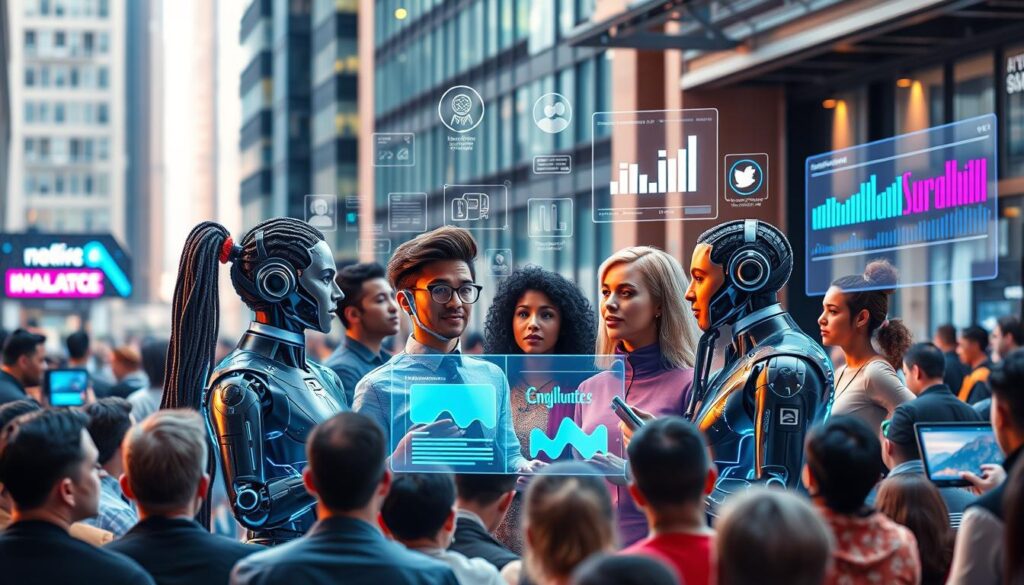
Another big plus is their 24/7 availability. AI virtual influencers don’t need to sleep, so they can always talk to your audience. This means they can connect with people around the world at any time. It helps build stronger ties and makes your brand more visible.
- Cost Efficiency: You save on travel and get to work with them anytime, which is cheaper over the long run.
- Global Reach: These influencers can reach fans everywhere, no matter where they live. This makes your brand more global.
- Consistency and Relatability: Tools like Leonardo and Midjourney help keep virtual influencers consistent. This makes your brand look good and keeps fans interested.
Facts show how well this method works:
- Brands got 2,500 new followers in just a month by using AI influencers.
- They also saw a 15% rate of people engaging with their posts in that time.
- And they made $500 from working with brands after only a month.
Platforms like AIfluencers let businesses big or small use these advantages. They offer plans to make and customize AI virtual influencers. The Starter Plan is $35 for 10 AIfluencers. The Premium Plan is $97 for 100 AIfluencers, plus up to 500 pictures and 100 videos per influencer.
By adding AI virtual influencers to their marketing, brands not only save money. They also get more engagement and reach a bigger audience. Plus, they keep a good and relatable online image.
The Business Impact of AI Virtual Influencers
AI virtual influencers are changing the game in digital marketing. They promise increased engagement and give brands complete control over their messages. Let’s explore how AI virtual influencers are impacting businesses:
These digital personalities often get more attention because they’re new and exciting. A study by HypeAuditor found they can get up to 3% more engagement on Instagram than real people. Their success comes from well-designed characters and precisely planned content.
| Metric | AI Virtual Influencers | Human Influencers |
|---|---|---|
| Annual Earnings | $11 million (Lil Miquela) | 46 times higher |
| Projected Market Value (2030) | $37.8 billion | N/A |
| Campaign Cost Reduction | Up to 30% | N/A |
Brand Control and Consistency
One big benefit of AI virtual influencers is total brand message control. Unlike real-life influencers, they are always in line with the brand’s goals. This consistency boosts brand loyalty and recognition.
With AI getting better, companies see big savings, according to Gartner. They save up to 30% by not paying for travel or other costs related to real influencers. This makes AI virtual influencers a smart choice for marketing budgets.
Challenges and Ethical Concerns of AI Virtual Influencers
AI virtual influencers present unique challenges and ethical issues. One big problem is authenticity and trust issues. These influencers don’t have real-life experiences or emotions. So, people often doubt if they should trust their recommendations. This doubt can make it hard for marketers to connect with their audience. 
As AI virtual influencers become more popular, regulatory and ethical issues arise. There’s a push for clear rules to make sure they’re used in a transparent and ethical way. Following data protection laws, like GDPR in Europe, is vital to avoid legal trouble with AI influencers.
| Area of Concern | Details |
|---|---|
| Transparency and Authenticity | Many followers may not realize AI influencers are not real, and a significant portion of their content is often scripted by developers and marketing agencies. |
| Manipulation and Influence | There is a notable increase in consumer behavior influenced by AI-driven influencers, raising concerns about targeted psychological impacts. |
| Lack of Accountability | Instances of misinformation spread by AI influencers are harder to attribute, presenting legal and ethical gray areas. |
| Ethical Use of Data | Bias in data used for training AI influencers can result in privacy violations and skewed content, unlike genuine human insights. |
| Exploitation and Labor | AI virtual influencers are more cost-effective than human influencers, raising labor concerns and impacting opportunities for real influencers. |
| Cultural Sensitivity | AI influencers sometimes promote cultural stereotypes, leading to distorted cultural representations and insensitivity towards global social issues. |
| Mental Health | AI-driven mental health advice can lead to emotional misrepresentation, posing ethical concerns compared to traditional human support. |
| Societal Impact | The normalization of relationships with AI entities may reduce genuine human interactions, impacting societal dynamics negatively. |
Current Trends in Virtual Influencer Marketing
The *Integration with Social Media Platforms* is key for virtual influencers. Platforms like Instagram and TikTok are vital. They let AI influencers like Lil Miquela and Shudu shine. They use advanced features for better content and more audience engagement. Lil Miquela makes about $10 million from brands, all without a photo studio. This shows how powerful these integrations are.
Virtual influencer collaborations are catching on. These often include partnerships with humans or other virtual beings. They’re setting new trends. Take Noonoouri, who has 472k followers and worked with luxury brands like Versace. Or Brazil’s Lu do Magalu, with 7.1 million followers. She worked with 40 brands last year and brought in about €918k in value.
Virtual influencers are getting more popular. Now, 58% of US people follow at least one. This shows people trust and accept them more, making them great for companies. For instance, Miquela Sousa worked with 91 brands last year. With 2.6 million followers, she brought in around €219k.
| Virtual Influencer | Followers | Collaborations | Estimated Media Value |
|---|---|---|---|
| Lu of Magalu | 7.1M | 40 | €918k |
| Noonoouri | 472k | 130 | €771k |
| Imma | 389k | 80 | €94k |
| Shudu | 239k | 18 | €7k |
| Rozy | 170k | N/A | N/A |
The influencer marketing world is changing. Brand collaborations with virtual influencers are flexible and bring high ROI. Recent studies show that 71% of brands see a higher ROI with AI influencers. This highlights their growing importance in today’s marketing.
The Role of AI Virtual Influencers in the Creator Economy
AI virtual influencers are gaining attention in the creator economy, right next to human creators. By 2024, this economy was worth USD 189.74 billion. Experts expect it to soar to USD 2.71 trillion by 2037. This growth shows how digital influencer AIs are becoming more important in creating and sharing content on various platforms.
As noted in Deloitte’s 2023 Creator Economy in 3D Survey, 94% of brands working with creators are now using or planning to use generative AI. This trend indicates a strong move towards AI to improve content and increase viewer engagement. Virtual influencers like Lil Miquela have quickly become popular, gaining over a million followers in two years. Also, the Brazilian company Magazine Luiza made $552 million in profit in 2019 by using virtual influencer marketing techniques.
Yet, AI’s rise in the creator economy has its downsides. Even though many are using AI to make more content, simplify production, and prevent burnout, there are worries. Some are concerned about losing the personal touch and jobs like social media management, customer service, and graphic design becoming obsolete because of AI. But, new roles for AI specialists are appearing, making room for both AI and human jobs.
To make the most of AI, brands and creators need to be open and responsible. It’s essential to find the right balance between human creativity and AI’s efficiency. As we go forward, the relationship between human creators and AI influencers will keep changing. It will lead to a rich and varied creator economy.


Leave a Reply