


Ever wonder why some online marketers turn leads into loyal customers with ease, while others don’t? The secret? They know how to use lead- and sales-funnels well. In the digital world, getting these funnels right is crucial for big growth, good lead handling, and strong sales.
These funnels help guide potential buyers from first knowing about a product to finally buying it and more. They’re key for businesses that want a smooth customer journey, better marketing, and more sales. But, making and keeping up with these funnels can feel tough. There are so many strategies and tools out there.
Key Takeaways
B2B firms often struggle to find good leads.
Having a lead generation funnel is vital for B2B growth.
Email marketing is super effective, ranking third in ROI.
Success in the lead funnel needs content that speaks to the audience.
Knowing the customer journey through data and insights makes the funnel work better.
Understanding Lead- and Sales- Funnels
In today’s digital marketing world, it’s key to grasp lead and sales funnels. These frameworks help guide potential buyers from their first interest to the final purchase. They blend important elements like lead scoring and marketing automation to boost success.
Definition and Purpose
Lead funnels are all about engaging customers early on. The aim is to spark interest and gather info from prospects. Tactics like content marketing, social media, and SEO are used to draw in potential buyers. Sales funnels, however, focus on nurturing those leads towards a purchase. Marketing automation lets businesses smoothly manage this journey.
Key Differences Between Lead and Sales Funnels
Lead and sales funnels both work to turn prospects into customers, but they do so differently. Lead funnels use wide-reaching strategies and lead scoring to find top prospects. Sales funnels, in contrast, rely on personalized communication, guided by detailed buyer personas. This helps in understanding customers better.
Lead funnels include awareness and consideration, focusing on initial interest. Sales funnels go further, including decision and retention stages to keep customers loyal. To get a clear picture, see the comparison below:
| Aspect | Lead Funnel | Sales Funnel |
|---|---|---|
| Focus | Initial engagement and capturing interest | Nurturing leads to conversion |
| Key Tools | SEO, Content Marketing, Social Media | Email Campaigns, Personalized Outreach, Sales Calls |
| Stages | Awareness, Consideration | Decision, Retention |
| Outcome | Generate potential leads | Convert leads to customers |
The Importance of Sales Funnels in Digital Marketing
Sales funnels are key in digital marketing. They offer a clear way to engage and convert customers. They help businesses improve customer experiences and increase profits. A well-managed sales funnel turns more leads into paying customers which boosts a business’s bottom line.
The Customer Journey
Conversion funnels help raise conversion rates by smartly guiding clients through the sale process. Understanding customer behaviors at each stage leads to better content. This makes marketing strategies more effective. For example, knowing customer behavior at different stages leads to targeted marketing. This is important since 71% of consumers expect personalized interactions from brands.
Keeping clients can be cheaper than finding new ones. So, sales funnels should include strategies for after a purchase too. For instance, Connected Television (CTV) works well for keeping and re-engaging current customers. Reviews are also key, with 98% of buyers valuing them when making a choice. This shows how crucial a good funnel is in leading a customer from awareness to purchase.
Revenue Impact
Sales funnels have a big effect on revenue by turning leads into customers and boosting conversion rates. Marketers aim for a conversion rate between 3.1% to 5%. Making the buying process simpler can lead to 62% more high-quality sales. Plus, happy customers often buy again, underscoring the value of keeping clients in digital marketing.
Using sales funnels also helps predict actual sales, which improves planning. For big-ticket items like luxury cars or complex software, it ensures thorough discovery and evaluation stages. For everyday items, consumers tend to move quickly to the purchase stage.
| Stage | Focus | Strategies |
|---|---|---|
| Awareness | Customer Journey Mapping | SEO, Content Marketing, Social Media |
| Evaluation | Conversion Optimization | Personalized Content, Reviews, Demos |
| Retention | Post-Purchase Strategies | CTV Re-engagement, Loyalty Programs |
By focusing on these areas, businesses can better navigate and optimize the customer journey. This improves conversion rates and helps build lasting relationships with clients.
Stages of a Sales Funnel
The sales funnel leads potential customers on a journey to becoming committed buyers. It’s key to manage this process well. Understanding each phase helps in knowing your buyers better.
Awareness
Awareness is the start of a customer’s journey with your brand. You aim to grab attention and introduce your product or service. Effective methods include using SEO and creating interesting content.
Discovery
In the Discovery phase, prospects look for more details. It’s a chance to share useful content like blogs and webinars. Matching content to your audience’s needs is important here.
Evaluation
During Evaluation, potential buyers weigh your product against others. Here, you showcase what makes your offer better. Using case studies and testimonials can make your case stronger.
Intent
The Intent stage shows a customer’s readiness to buy. At this point, free trials or demos can nudge them towards a purchase. Offer solutions that meet their specific needs.
Purchase
The Purchase phase finalizes the buying process. A smooth checkout and good customer support are essential. Sometimes, special deals help seal the deal.
Loyalty
Loyalty means keeping customers coming back. Good service, follow-up emails, and rewards programs are part of this. Staying connected after a purchase turns customers into brand advocates.
Effective Lead Generation Strategies
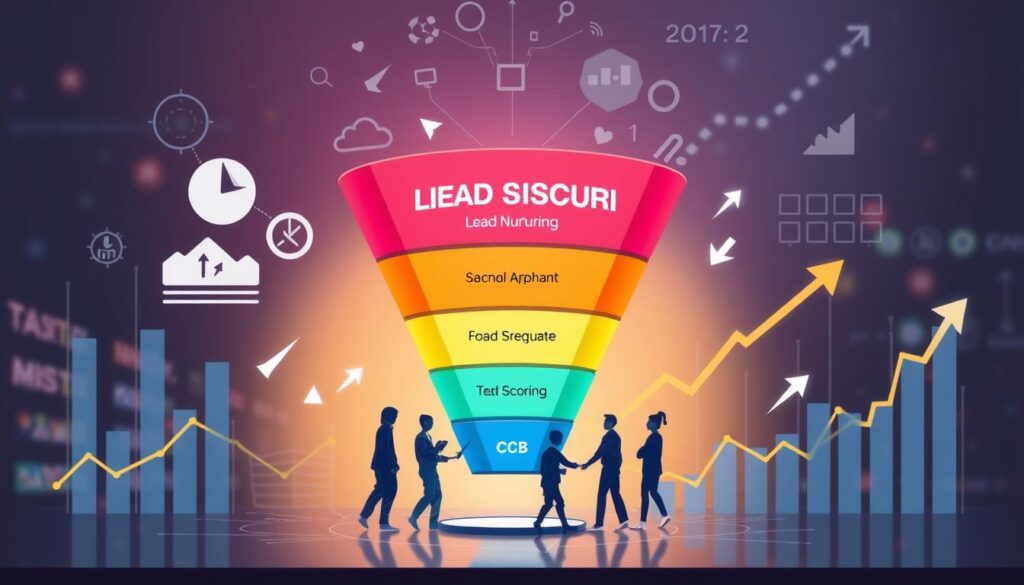
Effective lead generation uses a mix of strategies. These include SEO techniques, email marketing, and social media marketing. They help make your business more visible online. They also engage potential customers with content made just for them.
SEO Techniques
SEO is key for getting organic traffic to your site. It involves using the right keywords, linking back to your site, and making sure your site works well on phones. A blog that’s optimized can get 500 visits a day. That means 316 new people might learn about your business each day.
Email Marketing
Email marketing is still very effective. Using tools like ConvertKit helps you send personalized emails. This makes your readers feel special. For instance, a well-placed CTA can lead to 600 new sign-ups. Pop-ups can get you 700 more subscribers in a year.
Social Media Marketing
Platforms like Facebook, Instagram, and LinkedIn help you reach more people. Creating good content, using ads, and having strong CTAs works. For example, ThinSlim Foods saw conversions triple by using ads well.
| Lead Strategies | Example Outcomes |
|---|---|
| SEO Techniques | 500 daily visits, 34 proceeding to registration |
| Email Marketing | 600 signups via CTA banners, 700 subscribers through pop-ups |
| Social Media Marketing | 200% increase in conversion volume |
Using these strategies helps guide potential customers on their buying journey. This improves lead scoring and helps your business grow.
Leveraging Marketing Automation
In today’s fast-paced digital marketing world, using marketing automation can change your strategy for the better. It makes your campaigns more efficient and consistent. This frees your time for more strategic work.
Automation handles tasks like email marketing, social media, and ads, making operations smooth. It improves productivity and helps *digital growth*. It ensures your audience gets timely and personalized communications.
Here are some key stats about marketing automation’s impact:
| Metric | Average Results | Example |
|---|---|---|
| Qualified Leads | 500% Increase | Video Creation SaaS achieved 10,000 Organic Traffic Growth in 6 Months |
| Conversion Rates | 300% Higher | SaaS Healthcare boosted Organic Traffic by 24% in 6 Months |
| Organic Revenue | 4X Growth | Implemented through tailored automated funnels |
Marketing automation platforms let you segment your audience with precision. This means more targeted messages and better engagement. Without segmentation, you might see more people unsubscribe, hurting your efforts.
Lead scoring is also key. It helps find the most interested leads. Then, sales teams know when to talk about buying. Amazon and Club Vistara use automation to suggest products and boost loyalty, respectively.
Setting up a marketing automation funnel helps guide customers better. This leads to more sales and better use of resources.
Role of Content in Lead Funnels
Content is very important at every step of the lead funnel. Creating exactly the right content for each part of the funnel is key. It helps attract, engage, and convert potential customers successfully. Let’s look at the impact of content at each stage.
Top of the Funnel (TOFU)
At the funnel’s top, the goal is to draw in traffic. This is done with SEO-optimized blog posts, infographics, and more. TOFU content is about getting noticed without pushing sales too hard. Using SEO is effective because it helps you appear in searches that potential customers make.
Middle of the Funnel (MOFU)
In the funnel’s middle, it’s time to engage and educate your audience. MOFU content includes detailed guides, videos, and newsletters. This stage nurtures leads by showing how your products or services solve their problems. Posting on social media is a cost-free way to do this effectively.
Bottom of the Funnel (BOFU)
At the funnel’s bottom, the focus shifts to converting leads into customers. BOFU content uses success stories, reviews, and detailed descriptions. The goal here is to convince buyers with strong calls to action and show the value of making a purchase. The content must be persuasive to secure conversions.
To wrap up, content marketing should flow smoothly through the entire funnel. Each content piece must match the audience’s needs and stage in their buying journey. This ensures a smooth transition from lead to customer.
Analyzing Funnel Performance with Funnel Analytics
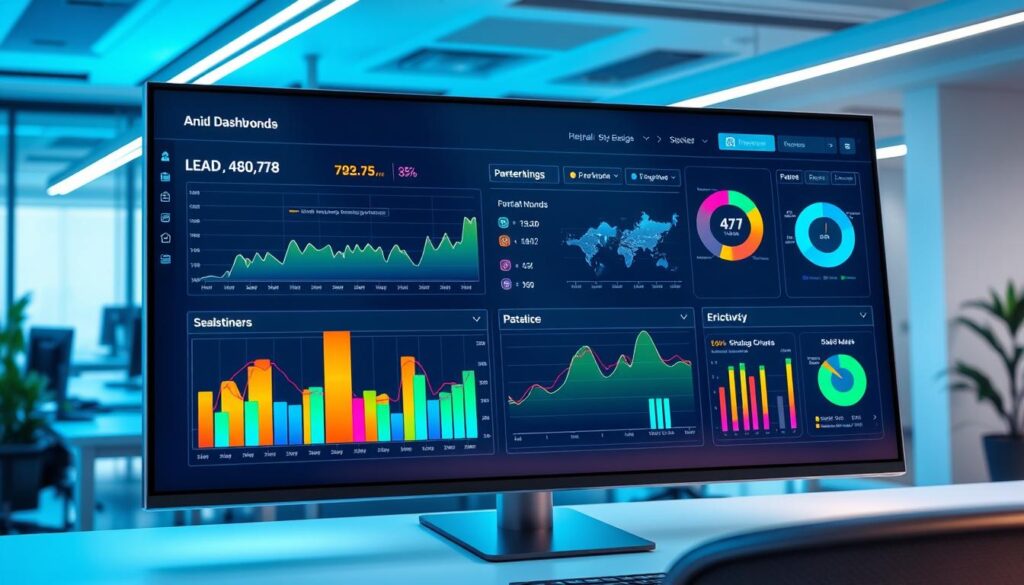
Funnel analytics help us see how well our sales and lead funnels are working. By looking closely at things like conversion rates and how long people stay in each stage, businesses can find where to get better. We’ll look at the key points to watch and tools that make your funnel the best it can be.
Key Performance Indicators (KPIs)
Knowing which KPIs to keep an eye on is key for analyzing performance well. These are some KPIs often used in funnel analytics:
- Total conversions
- Daily sign-ups
- Active users
- Customer churn rate
- Revenue churn rate
- Funnel velocity
These KPIs give insights into each funnel stage, from Awareness to Purchase and Loyalty. By assessing sub-funnels and reordering them, you can drive revenue growth. This also helps in spotting where visitors might drop off.
Tools for Funnel Analytics
There are many tools out there for doing deep funnel analysis. Here are a few top picks:
- Google Analytics: Offers detailed insights to optimize funnels for better performance and higher conversions.
- Amplitude: Helps in tracking user actions and visualizing the funnel for enhanced analysis.
- Hotjar: Uses heatmaps to understand user behavior on your website.
Using these tools, companies like Blue Apron and Rappi have boosted their conversion rates and average order sizes. For example, Blue Apron upped their conversion rate by 5.5% by updating their recipe page with insights from funnel analysis.
It’s also vital to keep an eye on funnel momentum to predict future results. This enables you to tweak strategies and refine each funnel stage. The goal is to improve the journey from the first engagement to the final sale.
Conversion Optimization Techniques
Conversion optimization is about convincing more visitors to become buyers. Using A/B testing is highly effective for this. It lets you see different landing page designs and how people react to them. This info helps make your website the best it can be.
Getting feedback from users is also key. Surveys and other data reveal what works and what doesn’t in your funnel. This makes your content and user experience better, increasing sales.
Powerful Calls to Action (CTAs) also boost sales. Good CTAs are clear, convincing, and well-placed. They encourage people to act. Using analytics, like Matomo, allows for effective sales funnel design and tracking. This improves the journey for users and sales.
- Lead Magnets: Resources offered in exchange for email addresses to capture potential customers.
- Optimizing Checkout Processes: Nearly 70% of online shoppers abandon carts due to lengthy forms and tedious checkouts.
- Social Proof: Customer testimonials and reviews increase trust and conversions.
- Mobile Optimization: Ensuring mobile-friendly pages is essential as many users shop on smartphones.
- Secure Payment Options: Offering options like PayPal builds trust and boosts conversions.
Let’s compare key factors prospects look at in a sales funnel’s decision stage:
| Aspect | Details |
|---|---|
| Pricing | Competitive pricing that provides value |
| Features | Unique and beneficial product features |
| Benefits | Clear depiction of tangible benefits |
Improving sales doesn’t end with the purchase. Post-purchase engagement strategies are vital. Follow-ups, proactive support, guides, and manuals build loyalty. They turn new buyers into repeat customers, uplifting your sales funnels’ success.
Conclusion
Understanding effective sales and lead funnels is crucial for online success. They help guide potential customers through the buying journey. Each step is optimized to increase the chances of selling.
By engaging your audience at every stage, from informative content to persuasive emails, you can improve your lead nurturing. This approach takes your marketing to new levels.
Effective funnels filter out low-quality leads, focusing on those more likely to buy. For instance, most sales reps focus on a limited number of high-quality leads. This shows the value of choosing quality over quantity.
By analyzing customer data, companies can make content that engages and informs. This leads to more sales and growth.
Leveraging CRM for funnel reports offers insights into lead volume and conversion rates. These tools help businesses stay adaptable and improve their strategies. Focusing on keeping customers and running targeted campaigns boosts digital success.


Leave a Reply